
Introduction
Picture this: you've just left an urgent care clinic with a $1,200 bill. Your high-deductible health plan hasn't kicked in yet, and you're staring at a balance that's coming straight out of your pocket. What if a separate policy had paid you $300 cash the moment you walked out — money you could apply toward that bill, your rent, or anything else?
That's the core idea behind indemnity health insurance. It pays you directly, in fixed dollar amounts, regardless of which provider you saw or what your primary plan covered.
Indemnity-style coverage is one of the oldest forms of health insurance in the U.S., yet most people encounter it without recognizing what it is — or realizing how different products use the same label in very different ways. This guide breaks down what indemnity health insurance is, how it works, the types available, what it typically covers, and who it makes sense for.
Key Takeaways
- Indemnity plans pay a fixed or predetermined amount per covered service — not a percentage of your actual bill
- No provider networks apply: you can see any doctor, specialist, or hospital
- Traditional full indemnity plans are now rare — fixed and hospital indemnity plans are the more common, accessible form today
- These plans work best as supplemental coverage paired with a major medical plan
- Balance billing is a real risk — you pay any gap between the plan's fixed payout and your provider's actual charge
What Is Indemnity Health Insurance?
Indemnity health insurance is a fee-for-service model: the insurer pays a set amount (either a fixed dollar figure or a percentage of covered costs), and you pay the rest. Because no provider network applies, you can see any doctor, specialist, or hospital without referrals or network restrictions.
The "Reasonable and Customary" Factor
Most traditional indemnity plans don't pay whatever a provider bills. Instead, they use a "usual, customary, and reasonable" (UCR) benchmark — defined by HealthCare.gov as the amount paid for a medical service in a geographic area based on what providers there usually charge for the same or similar service.
If your provider charges above the UCR rate, the gap becomes your responsibility. This is called balance billing, and it's the most important distinction between indemnity coverage and managed care plans, where contracted providers agree to accept negotiated rates.
A Brief History
Indemnity plans were the dominant form of employer-sponsored health coverage in the U.S. before HMOs and PPOs took hold. According to EBRI's research, traditional indemnity enrollment fell from 52% of covered workers in 1992 to just 15% by 1997 as managed care expanded. That decline continued: KFF's 2025 Employer Health Benefits Survey reports less than 1% of covered workers are now enrolled in conventional indemnity plans.
Traditional vs. Fixed Indemnity
These two product types share a name but work quite differently:
| Plan Type | How It Pays | Availability Today |
|---|---|---|
| Traditional (full) indemnity | Percentage of covered costs after deductible | Rare; less than 1% of employer plans |
| Fixed indemnity | Flat dollar amount per specific service | Common as supplemental coverage |
How Does Indemnity Health Insurance Work?
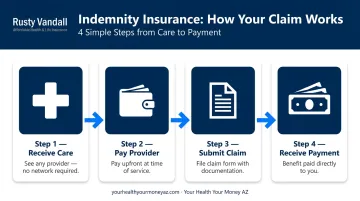
Indemnity insurance follows a simple claim cycle: you receive care, pay the provider, then submit for reimbursement. Here's how each step works in practice.
The Claim Process
- Receive a covered medical service from any provider — no referral or network check needed
- Pay the provider upfront in most cases (unlike managed care, where the insurer pays the provider directly after an in-network visit)
- Submit a claim form to your indemnity insurer with supporting documentation
- Receive a benefit payment — sent directly to you, not to the provider — based on the service type and your plan's benefit schedule
A Concrete Example
Say you visit urgent care for a respiratory infection. Your fixed indemnity plan pays:
- $100 for the physician visit
- $200 for a lab test
Your actual bill: $650. The plan pays $300. You owe $350 — plus you still need to satisfy your major medical plan's deductible separately.
Regulatory Status
Fixed indemnity plans are classified as "excepted benefits" under federal law when certain conditions are met. This means they are exempt from many ACA protections — including essential health benefits requirements, pre-existing condition rules, and, as CMS notes, No Surprises Act protections generally do not apply to fixed indemnity products. Always read plan terms carefully before enrolling to understand exactly what is and isn't covered.
Types of Indemnity Health Insurance Plans
Traditional (Full) Indemnity Plans
These pay a percentage of covered medical costs after a deductible — without restricting you to a provider network. They're now extremely rare. HealthCare.gov's Marketplace lists plan types as EPO, HMO, PPO, and POS — traditional indemnity doesn't appear among them.
Fixed Indemnity Plans
Fixed indemnity plans pay a flat dollar amount per specific service — per doctor visit, per ER visit, per surgery type — regardless of actual cost. Key characteristics:
- Available year-round from at least some carriers, outside standard ACA open enrollment windows
- Commonly used to supplement a high-deductible health plan
- Classified as excepted-benefit, limited-benefit coverage — not comprehensive insurance
Two related product types build on this fixed-benefit model and now dominate the supplemental health market.
Hospital Indemnity and Critical Illness Plans
These are the most widely sold supplemental indemnity-style products today:
- Hospital indemnity plans pay a fixed daily benefit for hospital stays, ICU admission, and related events
- Critical illness plans pay a lump sum upon diagnosis of a covered condition: cancer, heart attack, stroke, and similar serious diagnoses
- Both are commonly offered through employers as voluntary benefits
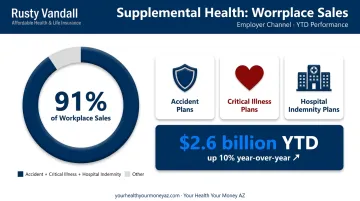
LIMRA reported that accident, critical illness, and hospital indemnity products together made up 91% of workplace supplemental health sales in Q3 2024, with year-to-date figures reaching $2.6 billion — up 10% from the prior year.
What Does Indemnity Health Insurance Cover?
Coverage varies by plan, but fixed and hospital indemnity plans typically pay flat-dollar benefits for:
- Hospital stays — for example, Aflac's group hospital indemnity plan pays $150 per day up to 180 days
- ICU admission — Aflac's same plan pays $150 per day up to 30 days
- Emergency room visits
- Physician visits
- Surgery
- Lab tests and X-rays
- Prescription drugs — often with strict caps (Aflac's plan example: $10 per prescription, maximum 5 per year)
What's Typically Not Covered
- Preventive care — often subject to a waiting period (Philadelphia American's Health Choice Select plan, for example, has a 60-day waiting period for preventive care benefits)
- Pre-existing conditions — may be excluded for a set period; Aflac's group hospital indemnity plan excludes conditions for which treatment was received within 90 days before coverage, with a 12-month benefit limitation
- Benefit schedule maximums — once you hit the plan's flat-dollar limit, any remaining costs come out of pocket
The Flexibility Factor
That coverage gap is where the payment flexibility becomes useful. Once the benefit lands in your account, you can apply it toward your deductible, co-pays, an out-of-network bill, or non-medical expenses like groceries or rent during recovery — no receipts required, no reimbursement process. Traditional health insurance ties every dollar to a specific medical claim; indemnity plans don't.
Pros and Cons of Indemnity Health Insurance
Pros
Indemnity plans offer flexibility most major medical plans don't:
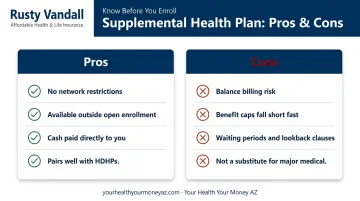
- No network restrictions — see any doctor, specialist, or hospital without referrals; particularly valuable for rural residents and people with long-standing specialist relationships
- Purchase outside open enrollment — fixed indemnity plans are generally available year-round, filling coverage gaps when ACA enrollment windows are closed
- Cash paid directly to you — benefit payments can offset deductibles, out-of-pocket costs, or everyday living expenses during recovery
- Pairs well with HDHPs — fixed or hospital indemnity benefits help bridge the gap before a high-deductible plan's coverage activates
Cons
These plans also carry real limitations worth understanding before you buy:
- Balance billing risk — providers aren't contracted with the indemnity insurer, so they can bill you for the full amount above what the plan pays; No Surprises Act protections generally don't apply here
- Benefit caps that fall short fast — a $150/day hospital benefit looks reasonable until you're facing a $4,000/day room charge; fixed caps rarely keep pace with actual healthcare costs
- Waiting periods and lookback clauses — many plans impose waiting periods (Philadelphia American, for example, requires 60 days before preventive care benefits activate) and may exclude pre-existing conditions during an initial period
- Not a substitute for major medical — fixed indemnity plans are not ACA-compliant and don't cover essential health benefits; using one as your only coverage leaves significant financial exposure
Who Should Consider Indemnity Health Insurance?
Fixed and hospital indemnity plans make the most sense as a supplement, not a standalone solution. Strong candidates include:
- HDHP enrollees who want help bridging the deductible gap before major medical coverage kicks in
- Self-employed individuals and gig workers seeking supplemental cash-flow protection without network restrictions
- Employees offered voluntary workplace benefits who want extra financial cushion for hospitalization
- Anyone with limited provider access due to geography or specialty needs
Who Should Avoid Using It as a Primary Plan
- People managing chronic conditions requiring regular specialist care
- Families with children who need consistent, comprehensive pediatric coverage
- Anyone who could face significant medical expenses — the gaps in fixed indemnity coverage can be substantial
If the right fit isn't clear from either list, that's exactly when an independent agent adds the most value. Rusty Vandall at Your Health Your Money AZ works with carriers including Philadelphia American, Aetna, and UnitedHealthcare to compare indemnity options alongside ACA health plans and Medicare supplement coverage — side by side, with both short- and long-term needs in view.
Reach Rusty directly at 602-291-5169.
Frequently Asked Questions
What is indemnity health insurance?
Indemnity health insurance reimburses the policyholder a set amount per covered medical service under a fee-for-service model, with no network restrictions. The insurer doesn't contract with specific providers; it pays a fixed or percentage-based benefit per covered event, regardless of where you receive care.
What does indemnity health insurance cover?
Coverage varies by plan but typically includes hospital stays, ER visits, surgery, physician visits, lab tests, and prescriptions — each paid as a flat dollar benefit, not a percentage of the total bill. Because the benefit goes directly to you, it can also be applied to non-medical expenses.
Is indemnity health insurance a PPO or HMO?
No. Indemnity insurance is a separate, older plan type that predates managed care. Unlike PPOs and HMOs, it has no provider network and pays a flat or percentage-based benefit regardless of which provider you use.
Is indemnity health insurance worth it?
It depends on your existing coverage and health needs. Fixed and hospital indemnity plans can meaningfully offset out-of-pocket costs when paired with a high-deductible plan, but they're not designed to stand alone — the coverage gaps are too significant for that.
Can indemnity insurance replace my primary health insurance?
Indemnity plans are not ACA-compliant and don't cover essential health benefits or pre-existing conditions. They work as supplemental tools only and should always be paired with a major medical plan.
What is the difference between traditional indemnity insurance and a fixed indemnity plan?
Traditional indemnity plans pay a percentage of covered medical costs after a deductible. They're now very rare, appearing in less than 1% of employer plans. Fixed indemnity plans pay a predetermined flat dollar amount per specific service and are the more common option available today as supplemental coverage.