
Most small business owners pay nothing directly out of pocket to an insurance broker. The broker isn't working for free, though. They're typically compensated through commissions paid by the insurer, which are built into the policy premium itself.
For ACA health insurance specifically, the picture is even cleaner: brokers are paid directly by the carrier, meaning you get professional plan comparison and enrollment help at no added cost to you.
This article covers how brokers earn money, what fees (if any) look like for small businesses, when using a broker makes sense, and what to ask before you get started.
Key Takeaways
- Most brokers earn commissions from insurers — not directly from you
- Broker commissions are built into your premium — going direct rarely saves you money
- Some brokers charge additional service fees, which must be disclosed in writing before you commit
- For ACA Marketplace plans, brokers are compensated by the carrier — small businesses generally pay nothing extra
- This guide covers what to ask any broker so you know exactly what you're paying for
How Insurance Brokers Are Paid: Commissions vs. Fees
The Commission Model
When a broker places your business with an insurer, the insurer pays the broker a percentage of the premium. That commission is built into the cost of the policy — meaning the price you pay is generally the same whether you go through a broker or purchase directly from the carrier.
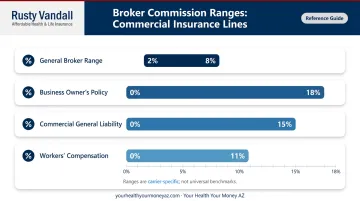
According to Investopedia, broker commissions typically range from 2% to 8% of annual premiums. For carrier-specific context, The Hartford's producer compensation disclosures show base commission ranges that vary by commercial line — for example, Business Owner's Policies can range from 0% to 18%, commercial general liability from 0% to 15%, and workers' compensation from 0% to 11%. These figures are carrier-specific examples, not universal benchmarks.
For ACA Marketplace plans, the structure is different. CMS confirms that brokers receive compensation directly from QHP issuers under their carrier agreements — the Marketplace itself does not pay commissions. Federal regulation under 45 CFR 156.255(b) also requires that QHP issuers charge the same premium rate regardless of whether the plan is purchased through an agent, directly from the insurer, or through the Exchange.
Broker Fees — The Other Compensation Layer
Some brokers charge a direct fee to the client on top of (or instead of) a carrier commission. These fees typically apply to additional services such as:
- Ongoing policy management and renewals
- Compliance consulting or HR support
- Risk review and coverage gap analysis
Unlike commissions, broker fees come out of your pocket, not the insurer's. They are regulated at the state level and must generally be reasonable, disclosed in writing, and acknowledged by the client before work begins.
In Arizona, ARS 20-465 requires that any producer fee be disclosed and agreed to in writing, be reasonably related to the cost of the service rendered, and not duplicate fees already included in the insurer's rate filing. The Arizona Director can order refunds and impose civil penalties for violations.
Contingent Commissions: Worth Asking About
Beyond base commissions, some insurers pay brokers performance bonuses — called contingent or override commissions — based on factors like sales volume or policy renewal rates. The NAIC Producer Licensing Model Act defines these broadly and requires disclosure if a broker receives such compensation. The Hartford, as one carrier-specific example, lists contingent commission ranges of 1% to 6.5% for eligible producers.
Contingent commissions are legal and common across the industry. That said, volume-based incentives can influence carrier recommendations — so ask your broker upfront whether any apply to your account:
- Does your broker receive contingent commissions from any carriers on your account?
- If so, which carriers — and how does that factor into their recommendations?
A broker who answers these questions openly is one you can trust.
How Much Do Insurance Broker Fees Cost for Small Businesses?
There's no single standard broker fee — costs vary based on the type of insurance, your business's complexity, and the broker's business model.
Fee Structures You Might Encounter
- Commission-only: No direct fee to you; broker earns a percentage from the insurer
- Flat fee: A set dollar amount for specific consulting or placement services
- Percentage of premium: A direct charge calculated as a percentage of your annual premium
- Hourly rate: Less common but used for complex risk consulting engagements
Broker fees are not set by law and are negotiable between you and the broker — a point the California Department of Insurance makes explicitly. Because there's no regulated rate, costs vary widely by market, policy type, and the broker's scope of work. Always ask for a written fee disclosure before agreeing to anything.
ACA Coverage: A Different Story
For small business owners and self-employed individuals buying ACA-compliant health coverage — whether through the federal Marketplace or a state exchange — brokers are compensated by the insurer. You don't pay a separate fee for that service.
This is one of the most misunderstood aspects of ACA enrollment. Using a licensed broker to compare plans, run side-by-side cost estimates, and handle your enrollment paperwork costs you nothing beyond the premium you'd pay anyway.
Non-Refundable Fees: What to Confirm Before You Sign
When a broker does charge a direct fee, it's often non-refundable — even if you cancel the policy mid-term. Before signing any broker fee agreement, confirm in writing whether the fee is refundable and under what conditions.
That said, a broker who charges a modest fee but saves your business meaningfully on annual premiums can still represent better total value than going it alone. Evaluate the total cost of coverage, not just the broker's fee in isolation.
Broker vs. Independent Agent: What Small Business Owners Need to Know
The terminology here matters, and it trips up a lot of buyers.
| Role | Represents | Carrier Access | Binding Authority |
|---|---|---|---|
| Broker | The buyer | Multiple carriers | No — must submit to insurer |
| Independent Agent | The carrier(s) | Multiple carriers | Yes, typically |
| Captive Agent | Single insurer | One carrier only | Yes |
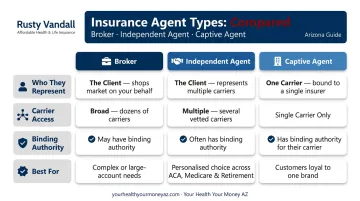
Investopedia notes that brokers represent consumers and help them compare options across insurers, but generally cannot bind coverage themselves — that has to go through an agent or the insurer directly. The NAIC explains that independent agents may sell policies from many different companies, while captive agents sell only for one.
For small businesses with multi-line needs — health coverage, supplemental benefits, and Medicare planning — access to multiple carriers through a broker or independent agent typically means more competitive options and better coverage fit than what a single-carrier captive agent can offer.
One practical difference worth noting: if you need proof of insurance quickly, a captive or independent agent with binding authority can activate coverage immediately. A broker who must submit the application for insurer approval may add a few days before coverage is officially in force.
That carrier access matters for comparison shopping, too. Rusty Vandall at Your Health Your Money AZ operates as an independent agent, working with carriers including Aetna, Cigna, Humana, and UnitedHealthcare, so clients can see genuine side-by-side comparisons rather than a single carrier's offerings.
When Should a Small Business Use an Insurance Broker?
For a sole proprietor who needs basic general liability, an online quote tool or direct carrier purchase can be perfectly adequate. As your coverage needs grow, the math on using a broker shifts quickly.
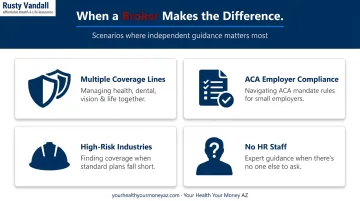
Scenarios Where a Broker Adds Clear Value
- Multiple lines of health coverage — ACA plans, supplemental dental, vision, and accident coverage across different carriers
- ACA compliance for employer-sponsored plans — rules around contribution minimums, eligible employees, and reporting requirements
- High-risk or specialized industries — where fewer carriers will write coverage and placement expertise matters
- No dedicated HR staff — broker guides research, comparison, enrollment, and renewal so you don't have to manage it alone
NFIB's 2023 survey found that 88% of small employers purchased or renewed health insurance through an agent or broker, and 64% had used the same broker for more than five years. That kind of loyalty points to something beyond a one-time transaction.
The Ongoing Relationship
A broker's value doesn't stop at sign-up. For small businesses without a dedicated HR team, the practical support shows up throughout the year — questions mid-policy, compliance changes, and plan comparisons when your situation shifts.
Annual renewals alone can surface better options or cost savings that wouldn't surface through a set-it-and-forget-it approach.
Client testimonials for Rusty Vandall at Your Health Your Money AZ reflect this directly. One small business owner noted: "I own a small business and the thought of trying to get insurance for my new employees was overwhelming. You made it easy. Always there to answer my questions." A self-employed realtor added: "He answers his phone every time I call."
For small business owners and self-employed individuals in Arizona exploring ACA health coverage options, Rusty offers carrier comparisons across major plans at no cost to you — reach him at 602-291-5169.
What to Ask a Broker Before You Get Started
Before you allow a broker to begin searching on your behalf, get clear answers to these questions:
On compensation:
- "How will you be compensated if I buy through you?"
- "Will you receive any contingent commissions or bonuses from the insurer?"
A broker who hesitates to answer these clearly is a red flag — disclosure should be direct and in writing.
On experience and access:
- "Do you work with businesses of my size and type?"
- "Which carriers do you have access to?"
An independent broker with multi-carrier access will generally produce more competitive options than one limited to a small network.
On post-sale support:
- "What will you do for me after I buy a policy — renewals, compliance questions, claims?"
Understanding the scope of ongoing service helps you evaluate whether any fee is worth paying — and what you're actually getting for it.
Frequently Asked Questions
What is a typical insurance broker fee for small businesses?
There's no standard fee. Some brokers charge nothing directly and earn solely through carrier commissions. Others charge a flat fee or a percentage of premium for complex work. Always request written fee disclosure before engaging a broker and confirm whether any fee is refundable.
How much does small business employee health insurance typically cost?
Costs vary by business size, location, and plan type. For ACA-compliant small group plans, employer contributions often range from $300 to $700+ per employee per month, depending on coverage level and carrier. An independent broker can compare options across multiple carriers to find the best fit for your budget and workforce needs.
Do small businesses pay out of pocket for an insurance broker?
In most cases, no. Brokers earn commissions from the insurer, which are built into the premium. Some brokers charge additional service fees for consulting or complex accounts, but these must be disclosed and agreed to in writing before any work begins.
What is the difference between a broker fee and a commission?
A commission is paid by the insurer to the broker and is already included in the policy premium. A broker fee is a direct charge from the broker to the client. Both can apply at the same time — so always ask for a full breakdown of how your broker is compensated before signing anything.
Is it worth using an insurance broker for a small business?
For businesses with complex coverage needs, multiple lines of insurance, or no dedicated HR support, a broker typically delivers enough value in expertise, time savings, and plan access to justify the cost. The more carriers and plan types your broker can access, the more likely you are to land on coverage that actually fits your business.