Introduction
Picture this: you're two weeks into a trip through Southeast Asia when you slip on a wet trail and break your wrist. The local hospital wants payment upfront — in cash — before they'll treat you. You pull out your insurance card, and the nurse shakes her head. Your U.S. health plan doesn't apply here.
This scenario plays out thousands of times each year for American travelers. The U.S. State Department is direct about it: the U.S. government will not pay your medical bills abroad, and most domestic health plans leave you exposed the moment you cross international borders.
Travel health insurance fills that gap. This guide covers what it is, the main types of coverage available, what's included (and what isn't), how much it costs, and how to choose a plan that fits your trip.
Key Takeaways
- Most U.S. health insurance plans do not cover medical expenses abroad — and Medicare is no exception
- Medical evacuation alone can cost between $25,000 and $250,000 without coverage
- Standalone travel medical insurance averages around $103 per policy for a 20-day trip
- Preexisting condition waivers must typically be purchased within 14–21 days of your initial trip deposit
- Trip cancellation coverage and travel medical coverage are separate products — most travelers need both
What Is Travel Health Insurance and Why Your Current Coverage Falls Short
Travel health insurance is a short-term supplemental policy that covers emergency medical expenses you incur while traveling. It's not the same as comprehensive travel insurance — which combines trip cancellation, baggage protection, and travel delays. Travel health insurance is specifically focused on medical emergencies during a trip.
The Coverage Gap Most Travelers Don't See Coming
U.S. domestic health plans are network-based. They're designed to work with contracted providers in specific regions, which means coverage often stops at the border — or at your state line if you have a narrow-network plan.
Even plans that technically allow out-of-network claims may require you to pay the full bill upfront, then navigate a reimbursement process with foreign providers who don't use the same billing language as your insurer.
According to the CDC, many international healthcare providers don't accept U.S. insurance at all and require cash or credit card payment upfront.
Medicare and Medicaid: The Blind Spot for Travelers Over 65
Original Medicare (Parts A and B) generally does not cover healthcare received outside the United States. There are narrow exceptions — such as emergencies during direct travel through Canada between Alaska and another U.S. state — but for the vast majority of international trips, Medicare provides no coverage.
Medicaid is equally limited: the State Department confirms that neither program pays for medical care outside the U.S. For Medicare beneficiaries planning international travel, a dedicated travel health policy is the only reliable way to close that gap.
Primary vs. Secondary Coverage: A Distinction That Matters
When comparing plans, pay attention to whether a policy is primary or secondary:
- Primary coverage lets you file directly with the travel insurer — no detour through your domestic plan first
- Secondary coverage requires you to first submit a claim to your regular insurer (which may deny it as out-of-network), then submit that denial to the travel insurer before they'll pay
That process distinction matters more than it sounds. Primary coverage is almost always simpler and faster — especially when dealing with foreign providers and unfamiliar billing systems. If cost is a factor and your domestic plan includes some international benefits, secondary coverage may work, but verify the claims process before you travel.
Types of Travel Health Insurance Coverage
Standalone Travel Medical Insurance
Standalone travel medical insurance covers emergency medical treatment incurred during a trip — hospital stays, urgent care visits, lab work, X-rays, prescriptions, and emergency dental care for sudden pain or injury. Routine checkups, preventive care, and non-emergency treatment fall outside the scope of these plans.
These plans come in two formats:
- Single-trip policies — purchased for one specific trip
- Multi-trip (annual) policies — cover multiple trips within a 12-month period, often more cost-effective for frequent travelers
Medical Evacuation Insurance
Medical evacuation coverage handles emergency transportation to the nearest adequate medical facility — or back to the U.S. — when local care isn't sufficient. The CDC reports that medical evacuation from a remote area to a quality hospital can cost more than $100,000, and the CDC Yellow Book cites a range of $25,000 to more than $250,000 depending on the circumstances and required transport. Air ambulances, medical escorts, and international transfers add up quickly.
Evacuation coverage can be purchased standalone or as part of a travel medical plan. For anyone traveling to remote destinations or countries with limited healthcare infrastructure, this coverage deserves serious attention.
Comprehensive Travel Insurance
Comprehensive travel insurance bundles emergency medical coverage with trip cancellation/interruption, baggage protection, and travel delay benefits. It costs more than a standalone medical plan, but offers broader protection under one policy.
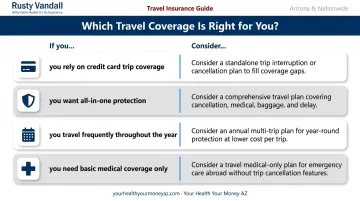
The right choice depends on your situation:
| If you... | Consider... |
|---|---|
| Already have trip cancellation through a premium credit card | Standalone travel medical insurance |
| Want all-in-one protection | Comprehensive travel insurance |
| Travel frequently with prepaid nonrefundable bookings | Comprehensive or annual multi-trip plan |
| Just need medical coverage for a well-protected trip | Travel medical-only plan |
One important note on CFAR (Cancel for Any Reason) coverage: This optional add-on allows you to cancel for reasons not covered by standard policies. Key conditions to know:
- Reimburses 50–75% of prepaid trip costs
- Must be purchased within 14–21 days of your initial trip deposit
- Requires canceling at least 48 hours before departure
It won't cover everything, but it gives you flexibility that standard policies don't.
What Travel Health Insurance Covers (and What It Doesn't)
What's Typically Covered
A standard travel health insurance policy generally covers:
- Emergency medical treatment (broken bones, heart attacks, strokes, severe infections)
- Hospital stays and urgent care visits
- Lab work, X-rays, and diagnostic imaging
- Emergency dental care for sudden pain or accidental injury
- Prescription medications related to a covered emergency
- Medical evacuation and repatriation of remains
- 24-hour emergency assistance services
Preexisting Conditions: The Gap Most Travelers Miss
Most travel health insurance policies exclude preexisting conditions by default. To get coverage for a condition you already have, you typically need to purchase a preexisting conditions exclusion waiver — and the window to do so is narrow.
Insurers generally require this waiver to be purchased within 10–21 days of your initial trip deposit. Miss that window, and your preexisting conditions remain excluded for the entire trip. If you have any ongoing health issues — diabetes, heart disease, a recent surgery — check the waiver terms before you buy.
Common Exclusions to Watch For
Read the fine print carefully. Most policies exclude:
- Routine or preventive care
- Elective procedures
- Self-inflicted injuries
- High-risk activities (skydiving, BASE jumping, helicopter skiing, free climbing) unless you add an adventure sports rider
- Travel to U.S. State Department Level 4 "Do Not Travel" destinations
- Losses caused by war or acts of war
- Pandemics and epidemics (though some insurers offer limited epidemic coverage endorsements)
How Reimbursement Works
In most cases, you pay the medical bill at the time of service and file a claim afterward for reimbursement. Some policies arrange direct payment to hospitals, which is critical if you're unconscious, traveling alone, or facing a large bill you can't cover upfront.
Before you travel, confirm whether your policy reimburses out-of-pocket or pays providers directly. Also note that emergency evacuations often require pre-authorization from the insurer. Call the 24-hour helpline before arranging transport — skipping that step can turn a covered evacuation into an uncovered one.
How Much Does Travel Health Insurance Cost?
According to Squaremouth's 2026 data, travel health insurance averages about $5 per day — roughly $103 per policy for a 20-day trip. Comprehensive plans cost more — averaging around $466 for international trips — reflecting the added trip cancellation and baggage benefits.
As a percentage benchmark, travel insurance generally runs 4–10% of total prepaid nonrefundable trip costs.
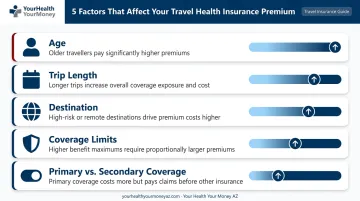
What Drives Your Premium Up or Down
- Age — Premiums increase with age, particularly for travelers 60 and older. Travelers in their 80s pay meaningfully more than younger travelers
- Trip length — Longer trips cost more to insure
- Destination — Countries with higher healthcare costs affect overall pricing
- Coverage limits — Higher medical and evacuation limits mean higher premiums
- Primary vs. secondary coverage — Primary policies typically cost more
A Note on Credit Card Coverage
Some premium travel credit cards include limited emergency medical benefits. The Chase Sapphire Reserve, for example, caps emergency medical coverage at $2,500 — enough for a minor situation, but well short of what a serious hospitalization or evacuation would cost. For longer trips or travelers with pre-existing conditions, card benefits are best viewed as a secondary layer — not a replacement for a dedicated travel health policy.
Who Needs Travel Health Insurance Most?
The honest answer: most international travelers. But some groups face substantially higher risk without it.
Highest priority:
- International travelers (U.S. domestic coverage rarely extends abroad)
- Medicare beneficiaries : Original Medicare provides virtually no coverage outside the U.S., making this a genuine financial risk for retirees
- Travelers with existing health conditions, especially those who need the preexisting condition waiver
- Anyone visiting countries with high medical costs or limited infrastructure
Also worth considering:
- Domestic travelers on narrow-network ACA plans: out-of-network care within the U.S. can trigger large out-of-pocket costs that travel health coverage may offset
- Self-employed individuals often carry ACA plans with narrow networks and minimal out-of-area coverage
If you're a Medicare beneficiary or ACA plan holder unsure where your coverage ends, that's the right starting point. Rusty Vandall at Your Health Your Money AZ works across multiple carriers to map your existing coverage and identify gaps before you travel — so you know exactly what protection you're missing.
How to Choose and Buy the Right Travel Health Insurance Plan
Questions to Ask Before You Buy
Work through these before purchasing any policy:
- Does your current U.S. health plan cover you at your destination?
- Do you need trip cancellation protection, or just medical coverage?
- Do you have a preexisting condition that requires a waiver — and are you still within the purchase window?
- Will you be doing adventure activities that require a rider?
- How long is your trip, and what are the healthcare costs like at your destination?
Where to Buy
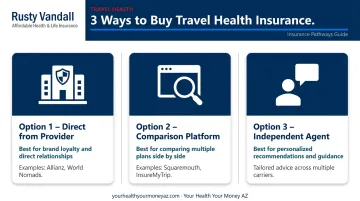
You have three main options:
- Buy directly from providers like Allianz, Seven Corners, Travelex, or World Nomads — all offer travel medical plans for U.S. travelers
- Use comparison platforms such as Squaremouth (20+ insurers), InsureMyTrip, or TravelInsurance.com to review quotes side by side
- Work with an independent insurance agent who represents multiple carriers — they can evaluate your full coverage picture and tailor recommendations to your trip length, destination, and health situation
Pre-Purchase Checklist
Before finalizing any policy, confirm:
- Destination validity — policy covers all countries on your itinerary
- Trip length — coverage period matches your full travel dates
- Medical limits — emergency limits are adequate for your destination's healthcare costs
- Evacuation coverage — included in the plan, not an optional add-on
- Preexisting conditions — waiver purchased within the required window if needed
- Emergency helpline — insurer provides 24-hour assistance
- Payment method — you know whether the policy reimburses you or pays providers directly
Frequently Asked Questions
How much does travel health insurance usually cost?
Standalone travel medical insurance averages around $103 per policy for a 20-day trip, or roughly $5 per day, according to Squaremouth's 2026 data. Costs vary based on your age, trip length, destination, and coverage limits — comprehensive plans that bundle in trip cancellation run closer to $466 on average.
Can I buy just travel health insurance without trip cancellation coverage?
Yes. Standalone travel medical insurance plans cover emergency medical expenses without trip cancellation or baggage benefits. They're typically more affordable and are a solid option for travelers who already have cancellation protection through a premium credit card or other means.
What is the best travel health insurance?
There's no universal answer — the right plan depends on your age, health conditions, destination, and what else you need covered. Top-rated providers include Travelex, Seven Corners, Allianz, and World Nomads — comparing options through a platform like Squaremouth or an independent agent helps you find the right fit.
Does my regular U.S. health insurance cover me when traveling abroad?
Most U.S. domestic health insurance plans do not cover medical expenses incurred abroad, or offer very limited coverage. Contact your insurer before departure to confirm what applies — most domestic plans have no international coverage at all, not just reduced out-of-network benefits.
Does Medicare cover medical emergencies when traveling internationally?
Original Medicare (Parts A and B) generally does not cover healthcare received outside the United States. The exceptions are narrow. Medicare beneficiaries planning international travel should strongly consider purchasing supplemental travel health insurance before departure.
When should I buy travel health insurance?
Buy shortly after booking — ideally within 14–21 days of your initial trip deposit to qualify for a preexisting conditions exclusion waiver. Most policies can be purchased up until the day before departure, but time-sensitive benefits like the CFAR add-on also require early action.