2026](https://file-host.link/website/yourhealthyourmoneyaz-i8vwuj/assets/blog-images/990b2bed-d9e4-4493-9542-fded42cd42de/1781188407764030_60d316248ee5427b9cbdd385868dc97a/360.webp)
Introduction
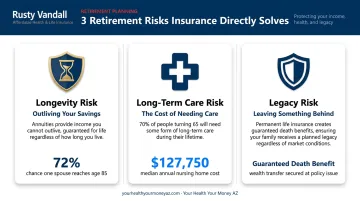
Retirement has changed dramatically. Without a pension, today's retirees must personally fund 20–30 years of living expenses — and according to the Society of Actuaries, a 65-year-old couple has a 72% chance that at least one spouse reaches 85. That's a long time to make savings last.
The financial pressure is real. Fidelity estimates a single 65-year-old will spend $172,500 on healthcare through retirement — before accounting for long-term care. Meanwhile, only 15% of private-sector workers still have access to a defined-benefit pension.
No investment account can replicate what insurance products provide: contractual guarantees for lifetime income, long-term care coverage, and legacy protection. This guide evaluates the best insurance companies for retirement planning in 2026 across four categories:
- Annuities — guaranteed income you can't outlive
- Long-term care insurance — coverage for home care, assisted living, and nursing facilities
- Life insurance — estate transfer and survivor income
- Income protection — supplemental coverage for gaps Medicare doesn't fill
Key Takeaways
- New York Life leads in guaranteed lifetime income through SPIAs and DIAs
- MassMutual is the top pick for conservative, dividend-backed growth
- Mutual of Omaha is the strongest traditional long-term care carrier
- Nationwide offers the broadest hybrid income + care coverage
- Allianz Life ranks second in indexed annuity sales, making it ideal for growth-oriented pre-retirees
- No single company wins every category — your goal (income, care coverage, or legacy planning) determines the right fit
- An independent agent who represents multiple carriers gives you side-by-side comparisons no single-company agent can
Why Insurance Is Essential to Your Retirement Plan
Market-linked accounts can grow your wealth — but they can't guarantee your income, your care, or your legacy. Insurance products fill that gap with contractual obligations that pay out regardless of market conditions, giving retirement planning a foundation that investments alone can't provide.
The three retirement risks insurance directly solves:
- Longevity risk — Annuities provide income you cannot outlive, no matter how long retirement lasts
- Long-term care risk — Nearly 70% of people turning 65 will need some form of long-term services; 2024 Genworth data puts the median annual cost of a nursing home private room at $127,750
- Legacy and income replacement risk — Permanent life insurance creates guaranteed death benefits and tax-advantaged cash value accumulation
Medicare doesn't solve the care problem either. It covers up to 100 days of skilled nursing care after a qualifying hospital stay, with $217/day coinsurance for days 21–100 and nothing after day 100. Custodial care — help with bathing, dressing, daily activities — isn't covered at all.
That's why the companies reviewed below were evaluated on how well they address multiple retirement risks — because a plan that only covers one gap still leaves you exposed.
Best Insurance Companies for Retirement Planning in 2026
These carriers were evaluated on AM Best financial strength ratings, product relevance to retirement planning, consumer trust, and depth in specific retirement product categories — not brand recognition alone.
New York Life
Founded in 1845, New York Life is the largest mutual life insurer in the United States. It offers fixed annuities, indexed annuities, immediate income annuities (SPIAs), deferred income annuities (DIAs), and whole life insurance.
Wink's Q4 2025 data shows the company held 41.9% of the income annuity market, 43.5% SPIA share, and 36.4% DIA share. Those numbers reflect genuine market leadership in income annuities.
| Category | Detail |
|---|---|
| AM Best Rating | A++ (Superior) — perfect 100 COMDEX score |
| Best Retirement Products | Fixed annuities, SPIAs, DIAs, indexed annuities, whole life |
| Best For | Retirees prioritizing guaranteed lifetime income and financial stability |
Mutual of Omaha
Mutual of Omaha is a policyholder-owned mutual insurer with a long track record in long-term care insurance. Its flagship product, the MutualCare Custom Solution, uses a pool-of-dollars design rather than a daily benefit structure, offering more flexibility in how and when benefits are used. Inflation protection and return-of-premium options are available.
AM Best affirmed its A+ (Superior) rating in April 2026. For retirees facing future care costs that Medicare won't cover, Mutual of Omaha remains the clearest choice among traditional LTC carriers.
| Category | Detail |
|---|---|
| AM Best Rating | A+ (Superior) — affirmed April 2026 |
| Best Retirement Products | Traditional LTC insurance (MutualCare Custom Solution), fixed annuities |
| Best For | Pre-retirees and retirees seeking flexible, comprehensive long-term care coverage |
Nationwide
Nationwide carries one of the broadest retirement product lineups of any single carrier: fixed, indexed, variable, and immediate annuities, plus the CareMatters hybrid LTC series. In October 2025, Nationwide launched the CareMatters Annuity — an annuity-based long-term care solution with simplified underwriting, LTC benefit multipliers, a guaranteed 3% fixed crediting rate, and single-premium or exchange funding options.
For retirees who want both income planning and care protection through one carrier, Nationwide's product range is hard to beat.
| Category | Detail |
|---|---|
| AM Best Rating | A+ (Superior) — also A+ from S&P |
| Best Retirement Products | Fixed, indexed, and variable annuities; CareMatters hybrid LTC; CareMatters Annuity (2025) |
| Best For | Retirees wanting income and long-term care coverage under one carrier |
MassMutual
MassMutual has operated as a mutual company for over 170 years and has paid dividends to eligible participating policyowners every year since 1869 — a track record that matters when evaluating a company you'll rely on for decades.
Its AM Best A++ (Superior) rating, affirmed October 2025, places it among a very small group of elite-rated carriers. The mutual ownership structure means profits return to policyholders as dividends rather than to shareholders, a structural advantage for whole life policyholders seeking guaranteed, compounding cash value growth.
| Category | Detail |
|---|---|
| AM Best Rating | A++ (Superior) — also AA+ from Fitch and S&P |
| Best Retirement Products | Whole life with cash value, fixed annuities, indexed annuities |
| Best For | Conservative retirees prioritizing guaranteed growth, capital preservation, and legacy planning |
Allianz Life
Allianz Life is backed by Allianz SE, one of the world's largest financial services organizations. In the U.S. market, it focuses primarily on fixed indexed annuities. Wink's Q4 2025 rankings placed Allianz Life second overall in indexed annuity sales, with its Benefit Control+ product ranked No. 1 selling indexed annuity across all channels.
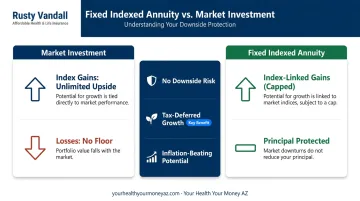
FIAs from Allianz offer tax-deferred growth linked to market indexes with principal protection if the market declines. That combination works well for pre-retirees who need growth to outpace inflation without taking on downside risk.
| Category | Detail |
|---|---|
| AM Best Rating | A+ (Superior) — affirmed March 2026 |
| Best Retirement Products | Fixed indexed annuities, fixed annuities, income riders |
| Best For | Pre-retirees seeking growth potential with downside protection |
How We Chose the Best Insurance Companies for Retirement Planning
Evaluation Criteria
Every company on this list met a minimum AM Best rating of A+ or higher — non-negotiable for products that must perform over a 20–40 year horizon. Beyond ratings, the evaluation considered:
- Product depth in retirement-specific categories (annuities, LTC, permanent life)
- Rider flexibility — benefit periods, inflation protection, income enhancements
- Claims-paying reputation for LTC and annuity providers specifically
- Third-party sales data (LIMRA, Wink) to validate actual market performance, not just advertised claims
Why Ratings Matter More for Retirement Products
A financial strength rating on a health insurance policy matters for a year or two. On an annuity or whole life policy, it matters for the next three decades. AM Best's A++ and A+ designations represent the highest tier of financial stability — carriers that have demonstrated the reserves and management quality to honor long-term obligations.
Choosing a carrier based on brand familiarity — or a single product — without checking whether that company excels in the specific category you need is a costly oversight. A carrier with a strong variable annuity lineup isn't necessarily the best LTC insurer.
The Case for Working With an Independent Agent
That mismatch is exactly why no single carrier can cover every retirement need. New York Life leads in income annuities, Mutual of Omaha has a strong track record in traditional LTC, and Allianz is a top player in fixed indexed annuities. Getting the best outcome often means combining products from different carriers based on your specific goals.
That's why working with an independent agent like Rusty Vandall at Your Health Your Money AZ matters. Rather than working from a single carrier's menu, his process starts with your situation — what you own, what you need, and what gaps exist — then compares options across all major carriers before recommending anything. Because he isn't tied to one company's lineup, those side-by-side comparisons come at no cost to you.

Conclusion
There's no universal answer to which insurance company is best for retirement. The right choice depends entirely on what you need:
- New York Life — best if guaranteed income is your top priority
- Mutual of Omaha — strongest pick if long-term care is the focus
- MassMutual — fits conservative savers who want capital preservation and legacy
- Allianz — built for pre-retirees who need growth without market risk
- Nationwide — works well for those who want income and care coverage under one relationship
The company name matters less than whether the specific product fits your situation — and that comparison takes more than a quick internet search.
If you're not sure where to start, contact Rusty Vandall at Your Health Your Money AZ — call 602-291-5169 or visit yourhealthyourmoneyaz.com/request-a-quote to request a no-cost, no-obligation consultation. He'll compare options across multiple carriers based on your actual retirement goals, not a single company's lineup.
Frequently Asked Questions
What are the best insurance companies for retirement planning in 2026?
The top carriers in 2026 are New York Life, Mutual of Omaha, Nationwide, MassMutual, and Allianz Life. The "best" depends on your goal — New York Life leads in guaranteed income, Mutual of Omaha in long-term care, and Allianz in growth-oriented indexed annuities.
What is the biggest mistake most people make regarding retirement?
Most people underestimate longevity and healthcare costs. They fail to plan for long-term care expenses Medicare won't cover and wait too long to secure guaranteed income streams — leaving themselves exposed if savings run short in their 80s or 90s.
What type of insurance is most important for retirement planning?
The three core categories are annuities (guaranteed income), long-term care insurance (care cost protection), and permanent life insurance (legacy and tax-advantaged growth). Most well-rounded retirement plans draw from at least two of these, depending on your income needs, health risks, and legacy goals.
What is the difference between a fixed annuity and a fixed indexed annuity?
A fixed annuity pays a set, guaranteed interest rate for a specified period. A fixed indexed annuity links growth to a market index like the S&P 500 but protects principal — you can earn more in good markets without losing money when markets decline.
Does Medicare cover long-term care costs?
No. Medicare covers up to 100 days of skilled nursing care after a qualifying hospital stay, with significant cost-sharing after day 20. It does not cover custodial care — assistance with bathing, dressing, or daily activities — so long-term care insurance is an essential gap-filler for most retirees.
How do I choose between different insurance companies for retirement?
Start by identifying your specific need: income, care coverage, or legacy. Then evaluate carriers by AM Best rating (A or higher), strength in that specific product category, and claims history. Working with an independent agent makes this easier — they can compare multiple carriers side by side and match you to the right product without being tied to a single company.